THE BRIAN CROSS MEMORIAL TRUST
  • Home
  • Projects
  • Fundraise
  • Home
  • Projects
  • Fundraise

Research Projects

ONGOING

UNDERSTANDING HOW IMMUNE CELLS BLOCK GLIOBLASTOMA TREATMENTS
£50,000 Towards this project October 2020 – September 2023

Recently, new immunotherapies (treatments that manipulate the immune system to attack tumours) have shown huge success in many cancers. Unfortunately, these revolutionary therapies have failed to induce a response in brain tumour patients. This is believed to be due to large populations of immunosuppressive cells being present in the tumour, as these prevent other immune cells (especially T cells) from accessing and subsequently killing the brain tumour. These immunosuppressive cells are referred to as tumour-associated myeloid cells(TAMs).
Currently, we don’t know where these TAMs come from or what they do. Because of this, we’re unsure how they’re blocking other immune cells from attacking brain tumours.
To learn more about where the TAMs come from, Dr Miller and his team have developed a new technology that can trace the origins of single cells. This technology makes use of DNA from mitochondria (the part of the cell that generates energy).
Because of the way that mitochondrial DNA changes, cells with similar mitochondrial DNA are likely to have come from the same place. This new technology is able to compare the mitochondrial DNA found in different areas of the tumour or the person’s blood, giving us an indication of their origins.
Alongside this new technology, Dr Miller will also be measuring what RNA and proteins are present in TAMs. Like DNA, RNA and protein are codes that can tell us more about a cell’s function. Once we better understand how TAMs work, we can then try to prevent them from blocking other immune cells from attacking brain tumours.
Overall, using these techniques Dr Miller and his team will:
  1. determine the origin of the TAMs found in glioblastomas
  2. understand the function of these TAMs
  3. model the interactions that these TAMs have with other immune cells, as this will mean researchers can try and block their immunosuppressive effects.

​TARGETING TREATMENT DAMAGE TO STOP RECURRENCE
£180,000 Fully Funded Project September 2020 - August 2023

Glioblastoma (GBM) is a deadly disease, with a very poor rate of survival following diagnosis. Thus, there’s an urgent need to develop new therapeutic approaches. A promising alternative to current therapies is to target the non-cancerous cells that are corrupted by tumours and ultimately aid in cancer progression.
These normal cells contribute to what’s called the tumour microenvironment (TME). TME-targeted drugs, such as immunotherapies, are promising new anti-cancer treatments. This lab, led by Dr Watson’s mentor Professor Johanna Joyce, at the University of Lausanne, has demonstrated that targeting specific cells in the TME, called tumour-associated macrophages, with CSF1R inhibitor drugs resulted in dramatically increased survival in pre-clinical glioma trials. However, in long-term trials a subset of tumours recurred following treatment
Interestingly, tumour recurrence always occurred right next to the so called ‘glial scars’ (GSs) that formed during the treatment. GSs are characterised by inflammation of common cells in the brain and lots of fibrous proteins.
Dr Watson aims to test the idea that GSs create a protective area for undeveloped tumour cells and that they also reprogramme TME cells to drive rapid tumour recurrence. Additionally, he has preliminary data that suggests these scars also form following therapies commonly used in the clinic, including radiation and surgical tumour resection.
However, almost nothing is known about tumour GSs, including what signals they use to assist cancer cells in surviving treatment. The aim of the current project is to identify exactly what tumour GSs are made up of and which signals are the main drivers of cancer recurrence.
Specifically, Dr Watson and his team have collected extensive glioblastoma samples from models treated with CSF1R inhibitors and analysed their protein makeup. Using a new approach that they’ve developed for microscopic imaging, they will determine where key proteins are in human and lab-grown tumours and which cells the proteins interact with.
Next, the team will use new bioengineered microenvironments, developed by Dr Watson, to see which proteins drive tumour recurrence
​Finally, they will stop GS formation with targeted drugs in their sophisticated pre-clinical models, to determine if this has the potential to benefit people with a GBM.

WINDOW PROJECT
​The power of drug combinations against brain tumours 
​

​The effectiveness of current chemotherapy for patients with glioblastoma, the most common type of brain tumour, is extremely low.
Identifying new drug combinations aimed at different types of glioblastoma is more likely to work than treatments targeting a single feature of the cancer. However, there appear to be many forms of the disease, and combinations of drugs that work in one patient may be different from those that work in others. In fact, the number of potential drug combinations available is staggering. The research team are applying computer modelling to reduce these numbers and identify effective combinations.
Research aimed at preventing the recurrence of brain tumours will remove the necessity of multiple operations and improve people’s quality of life. Whilst it will be a long and difficult task to eradicate recurrence completely, we are optimistic that WINDOW will be able to limit the severity of post-surgery disease and increase the overall survival for people affected by a glioblastoma. 
Find out more about the project at the WINDOW website, which will also be used as an open access portal for sharing data and methods.

CLINICAL RESEARCH FELLOW
£294,000 pledged to sponsor research

Support of clinical research fellow, Dr Nicola Ainsworth and her project, “Advanced Magnetic Resonance Imaging Techniques for the Detection of Brain Metastases.” Within the Griffiths Group of the Cancer Research UK, Cambridge Research Institute

​The research looked at small cell cancers which can move from the lungs to the brain and aimed to work out ways of detecting the risk of a cancer spreading at an early stage and preventing the need for cranial irradiation.


Nicola Ainsworth studied MRI methods for imaging metastasis of small cell lung cancer (SCLC) to the brain. Up to half of patients with SCLC will develop cerebral metastases, but since we cannot predict which ones, the current practice is to give them all prophylactic cranial irradiation, a therapy with significant long-term side effects. In addition to clinical studies, she developed a preclinical model of brain metastasis to investigate biological correlates of MRI signal changes and applied texture analysis methods for early detection of metastases on magnetisation transfer and diffusion-weighted MRI (DWI) (Figure 1).

http://www.cruk.cam.ac.uk/research-groups/griffiths-group

UCL CENTRE OF EXCELLENCE
£350,000 Sponsorship of the Programme Lead

The UCL Centre of Excellence was The Brain Tumour Charity’s (formerly Samantha Dickson Brain Tumour Trust) first dedicated brain tumour research centre. It is based in world-renowned Cancer Institute at University College London (UCL). The Centre opened in 2009 and is led by Professor Paolo Salomoni, The Brian Cross Professional Research Associate

In 2014, the team led by Professor Paolo Salomoni, discovered that drugs called chloroquine (already used against malaria) and hydroxychloroquine show promise as anti-cancer drugs. A clinical trial has now been approved for funding by Cancer Research UK, which will use hydroxychloroquine in combination with radiotherapy in elderly patients with glioblastoma. It is expected to start recruiting patients this year. The unique position of the Samantha Dickson Brain Cancer Unit within UCL, allowing enhanced collaboration between departments, has been fundamental to getting this trial off the ground in an almost unprecedented short timeframe.

https://www.thebraintumourcharity.org/our-research/research-tumour-type/high-grade-glioma/unwrapping-genes-to-find-new-treatments/

BRAIN TUMOUR RESEARCH CENTRE OF EXCELLENCE
Donation of £120,000 

Brain Tumour Research Centre of Excellence, in partnership with Imperial College Healthcare NHS Trust, London. Funding clinical nurse for 3 years.The new centre was chosen after a rigorous selection process including international peer review. While existing centres are led by neuroscientists, Imperial College is the first in the charity’s network to be headed up by a pioneering brain surgeon, Kevin O’Neill. The team will investigate the biology of tumour metabolisms to further understand the behaviour of this disease. The team will also be able to extend their use of innovative 3D real time surgical imaging..

The centre joins others at Queen Mary University of London, and at universities in Portsmouth and Plymouth, to become the fourth centre funded by the national charity Brain Tumour Research. The launch of the ground-breaking partnership with Imperial College Healthcare NHS Trust (London) means the charity is more than half-way towards its aim of creating a network of seven dedicated research centres.

http://www.braintumourresearch.org/

Picture
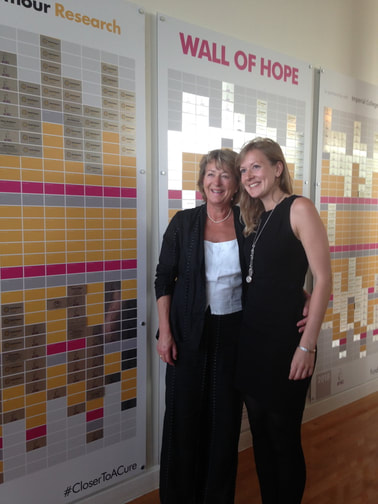
Sally Cross and Rosie Cross at the opening of the Brain Tumour Research Centre of Excellence 25/09/2015

Brian Cross Memorial Trust - raising money FOR research INTO Brain tumours
Charity Number: 1119259

Copyright © 2015